
Views: 0 Author: Site Editor Publish Time: 2026-09-22 Origin: Site


Specifying electrical infrastructure in commercial real estate carries high stakes. Transformer failure, structural incompatibility, or regulatory non-compliance directly causes catastrophic downtime, severe safety hazards, and delayed occupancy. Engineers and facility managers constantly balance energy efficiency against strict indoor fire safety codes, spatial constraints, and structural load limits. Evaluating a Dry‑Type vs Oil‑Immersed Transformer requires a strictly technical approach. The correct choice depends entirely on specific commercial project variables, including placement restrictions, load profiles, sustainability targets, and local regulatory requirements. This guide breaks down the engineering criteria for both transformer types. You will learn how to match equipment capabilities to your building’s unique demands. We provide actionable engineering parameters to ensure your electrical infrastructure supports long-term operational stability without compromising occupant safety or architectural design.
Safety & Placement: Dry-type transformers are the industry standard for indoor commercial applications due to their self-extinguishing properties and lack of combustible liquids.
Efficiency & Capacity: An oil-immersed transformer generally offers superior cooling, higher overload capacities, and better energy efficiency, making it ideal for high-load, outdoor commercial campus applications.
Structural & Logistical Impact: Oil-filled units are significantly heavier, requiring robust structural reinforcement and complex rigging, whereas dry-types are bulkier but lighter, easing indoor installation logistics.
Regulatory Compliance: Selection is heavily dictated by local building codes (e.g., NEC, NFPA), which impose strict vaulting and fire suppression requirements on indoor oil-filled units.
Table of Contents
Define baseline engineering requirements before selecting a transformer. Commercial buildings present unique challenges regarding occupant safety, space utilization, and environmental compliance. A viable transformer must meet strict operational parameters while integrating seamlessly into the facility infrastructure. You must evaluate the site conditions thoroughly to prevent costly redesigns during the construction phase.
Transformer installation must comply with electrical and fire safety standards. Indoor installations require proper clearance, fire protection measures, and compliance with regulations such as NEC and NFPA. These requirements help reduce fire risks, protect occupants, and ensure safe building operation.
Transformer size and safety requirements affect building space planning. Some oil-filled transformers need dedicated fire-rated rooms, ventilation systems, and containment structures. Proper planning ensures enough space for equipment, maintenance access, and future operation needs.
Large transformers require careful structural planning before installation. Engineers must consider floor loading, transportation routes, and lifting methods. Heavy equipment may require reinforced structures and specialized handling tools to ensure safe delivery and positioning.
Oil-filled transformers require protection systems to prevent environmental damage from fluid leaks. Secondary containment, spill control systems, and proper site planning help reduce contamination risks. Using suitable fluids and monitoring equipment improves operational safety.
Transformer selection affects energy efficiency and environmental performance. Efficient designs reduce long-term power losses, while recyclable materials such as copper and aluminum support sustainability goals. Modern facilities increasingly consider transformer choices as part of ESG and green building strategies.
Dry-type technology utilizes air and solid insulation for cooling. These units eliminate the need for liquid dielectrics. This design choice fundamentally alters how the equipment dissipates heat and integrates into commercial spaces. They rely entirely on ambient air circulation to maintain safe operating temperatures.
Manufacturers utilize two primary construction methods for dry-type units. Vacuum Pressure Impregnated (VPI) designs feature coils dipped in polyester or epoxy resin. VPI units work well in clean, controlled indoor environments. Cast Resin designs encapsulate the coils completely in solid epoxy under a vacuum. This solid casting provides superior protection against moisture, dust, and chemical vapors. Cast Resin units excel in harsh environments or high-humidity commercial basements.
Feature | VPI (Vacuum Pressure Impregnated) | Cast Resin |
|---|---|---|
Insulation Method | Coils dipped in polyester/epoxy resin | Coils fully encapsulated in solid epoxy |
Environmental Resistance | Moderate; best for clean, dry rooms | High; withstands moisture, dust, and chemicals |
Mechanical Strength | Standard | Superior; highly resistant to short-circuit forces |
Typical Application | Office buildings, retail spaces, schools | Industrial basements, coastal facilities, transit hubs |
Dry-type units dominate indoor commercial applications. High-rise office buildings rely on them for floor-by-floor power distribution, stepping down voltage close to the actual load. Indoor substations utilize these units to meet strict fire codes without building expensive vaults. Hospitals specify dry-types to ensure patient safety and eliminate fluid leak risks near sterile environments. Shopping malls deploy them in tight electrical closets near retail spaces. Their self-extinguishing nature makes them the default choice for heavily occupied structures.
Air cooling presents specific engineering challenges. Poor heat dissipation remains a primary risk. Dust and moisture accumulation can degrade solid insulation over time, leading to tracking and eventual short circuits.
Specify appropriate NEMA or IP enclosure ratings based on the room environment to block airborne contaminants.
Install dedicated HVAC ventilation to maintain ambient electrical room temperatures below 40°C.
Implement a strict maintenance schedule to vacuum dust from the cooling channels annually.
Oversize the transformer capacity or specify forced-air cooling fans (FA rating) for high-altitude projects to counter thinner air density.
Install surge arresters to protect the solid insulation from transient voltage spikes.
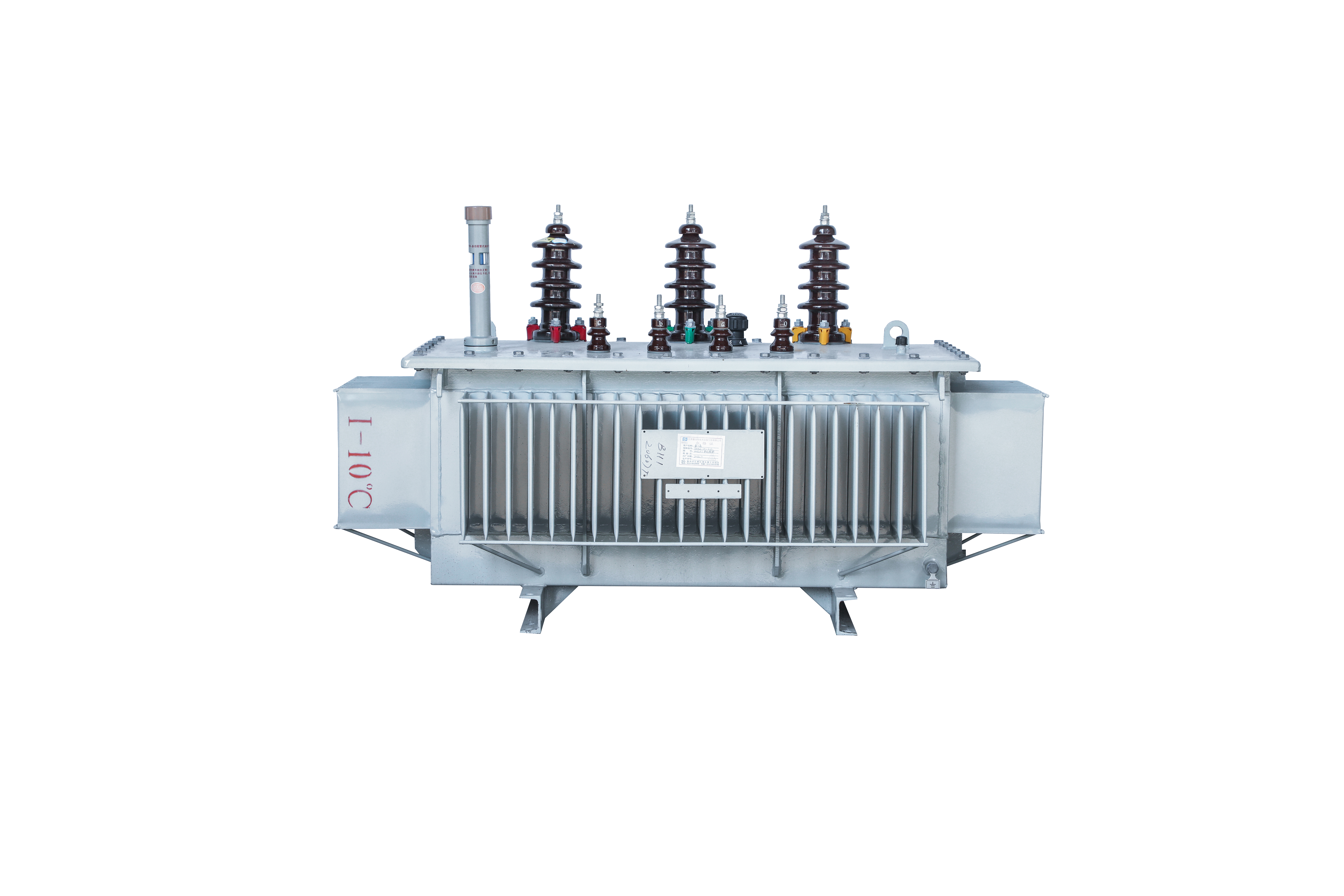
An Oil‑Immersed Transformer utilizes liquid fluids as both a coolant and a dielectric insulator. The core and coils sit entirely submerged within a sealed tank. This liquid medium provides exceptional thermal management and electrical insulation, allowing for highly compact core designs.
Oil-immersed transformers use liquid cooling to manage higher power loads. Systems such as ONAN and ONAF transfer heat away from internal components more efficiently than air cooling. This allows oil transformers to handle temporary overloads, large HVAC demand, and continuous industrial loads with better thermal stability.
Oil-immersed transformers are commonly installed outdoors for large power distribution systems. They are widely used in commercial campuses, data centers, industrial parks, and logistics facilities where high efficiency and large capacity are required.
Oil transformers provide excellent performance but require additional safety measures because of the insulating fluid. Proper solutions include using fire-resistant fluids, installing containment systems, reinforcing installation structures, and adding fire protection equipment to reduce operational risks.
Comparing these two technologies requires a detailed look at physical, operational, and maintenance characteristics. Each type presents distinct engineering trade-offs that directly impact facility design and long-term operations.

Physical dimensions dictate installation feasibility. Liquid-filled units are significantly heavier due to the fluid mass. However, their superior cooling allows for a more compact internal core, resulting in a smaller overall footprint. Dry-types require larger enclosures to facilitate adequate air circulation. While bulkier, they exert far less dead load on building structures. This lighter weight simplifies indoor placement on upper floors or suspended mezzanines.
Metric (Standard 1500 kVA Unit) | Dry-Type Transformer | Oil-Immersed Transformer |
|---|---|---|
Total Weight | Lighter (approx. 7,000 lbs) | Heavier (approx. 10,000 lbs) |
Physical Footprint | Larger (requires extensive air clearance) | Compact (dense fluid cooling) |
Structural Load | Moderate floor loading | High point loading |
Enclosure Type | Vented sheet metal | Sealed heavy-gauge steel tank |
Maintenance needs vary between transformer types. Dry-type transformers mainly require visual checks, dust cleaning, and ventilation inspection. Oil-filled transformers require more detailed maintenance, including oil testing, leak checks, dissolved gas analysis (DGA), and insulation condition monitoring to ensure long-term reliability.
Transformer efficiency affects long-term operating costs. Oil-immersed transformers usually achieve higher efficiency because oil cooling helps reduce operating temperature and energy losses. Dry-type transformers also meet efficiency standards but may experience higher losses during heavy loads due to increased heat.
Noise control is important in commercial and occupied buildings. Oil-filled transformers operate more quietly because the insulating fluid absorbs vibration and reduces transformer hum. Dry-type transformers may require additional vibration isolation and acoustic treatment when installed near offices or sensitive areas.
Modern transformers can connect with BMS and SCADA systems for real-time monitoring. Dry-type units commonly use temperature sensors to monitor coil conditions, while oil-filled transformers provide additional data such as oil temperature, pressure, and gas levels. These monitoring systems help detect problems early and support predictive maintenance.
Transformer lifespan depends mainly on insulation condition and thermal stress. Dry-type transformers typically last around 15–25 years, while oil-filled transformers can often operate for 25–35 years or longer with proper maintenance. Regular inspection and cooling management help extend service life for both types.
Selecting the right equipment involves balancing competing facility priorities. You must weigh spatial efficiency against risk management and future scalability. Every engineering decision carries downstream operational impacts.
Transformer placement affects both performance and building design. Outdoor installations usually favor oil-immersed transformers because they save indoor space and reduce HVAC load. Indoor installations often use dry-type transformers because they have lower fire risks and avoid complex oil containment requirements.
Insurance requirements influence transformer selection. Oil-filled transformers contain insulating fluid, which may require additional fire protection and containment systems. Dry-type transformers have lower fire risks, making compliance easier and reducing the need for specialized safety measures.
Future power demand should be considered during transformer selection. Oil-immersed transformers generally provide better overload capability and thermal capacity for expanding loads. Dry-type transformers may require additional cooling or replacement when building power requirements increase significantly.
Sustainability goals affect modern transformer choices. Dry-type transformers offer easy material recycling, while oil-filled transformers require careful fluid management. Using biodegradable ester fluids can improve the environmental performance of liquid-filled transformers and support green building requirements.
Take the following actions to finalize your commercial transformer selection:
Hire a licensed electrical engineer to execute a comprehensive facility load study, factoring in future EV charging and HVAC expansions.
Submit preliminary placement drawings to the local Authority Having Jurisdiction (AHJ) to verify fire code and vaulting compliance.
Contract a structural engineer to calculate exact floor loading capacities and design necessary steel reinforcements for the designated equipment room.
Request detailed energy efficiency models and heat rejection data from equipment manufacturers to properly size the electrical room ventilation system.
A: Yes, but it requires strict compliance with NEC and NFPA codes. You must construct a dedicated, fire-rated vault with specialized ventilation, drainage, and blast doors. Using less-flammable liquids, like natural ester fluids, can sometimes reduce these vaulting requirements, but local AHJ approval is always mandatory before installation.
A: A dry-type unit typically lasts 15 to 25 years. Airborne contaminants and thermal stress gradually degrade the solid insulation over time. A liquid-filled unit generally lasts 25 to 35 years or more. The fluid protects the core from oxidation and provides superior thermal management, significantly extending the equipment's operational life.
A: Liquid-filled units are significantly heavier due to the fluid mass. This requires robust structural reinforcement, thickened concrete pads, and heavy-duty crane rigging. Dry-type units are lighter, exerting less dead load on floors. This makes dry-types much easier to install on upper levels or suspended commercial mezzanines without extensive structural upgrades.
A: Yes. Liquid-filled units use the fluid and heavy steel tank to dampen core vibration noise. Dry-types lack this acoustic dampening. When installed indoors near occupied commercial spaces, dry-types often require specialized vibration isolation pads and acoustically treated enclosures to prevent disruptive humming from reaching office environments.
A: Liquid-filled units require significantly more maintenance. Technicians must regularly perform Dissolved Gas Analysis (DGA), sample the fluid, and inspect secondary containment for leaks. Dry-types require minimal maintenance, usually limited to visual inspections, checking ventilation fans, and vacuuming dust off the coils during scheduled facility power outages.
A: NFPA guidelines strictly limit combustible liquids in multi-story structures to prevent catastrophic fire and smoke spread. Because dry-types use self-extinguishing solid insulation and contain no liquids, they easily meet indoor fire codes. Liquid-filled units are generally restricted to exterior pads or heavily fortified subterranean vaults to ensure occupant safety.


